


EFC HISTORY
The Edmonton Flying Club, home of the Edmonton Flight College, is unique as it is both a flying club and a flight school. Located just west of Edmonton, Alberta Canada, the club operates out of Parkland airport in Parkland County.
Founded in 1927 as the Edmonton and Northern Alberta Aero Club, the club’s first president was Canadian World War 1 flying ace, Wilfrid R. ‘Wop’ May. At the time, the purpose of the club was to promote aviation and to provide flight training.
Today, the Edmonton Flying Club is a member-owned organization operating a diverse fleet of aircraft and providing flight training at all levels from recreational pilots to Commercial Multi-Instrument rated, career-ready pilots.
How it All Started:
The History of Edmonton’s Flying Club
Founding
Until the 1920s, Canada had no formal system of licensing or training for pilots. In 1927, the government introduced a system that pledged to support aviation clubs with aircraft and funding.
In response, Captain Wilfrid R.’ Wop’ May, a WWI flying ace, and Ken Blatchford, the former mayor of Edmonton, called a meeting on August 2, 1927, that led to the formation of the Edmonton and Northern Alberta Aero Club. The club was created to promote aviation and provide flight training. May was elected as club president, and the club initially had 32 members.
Early Years
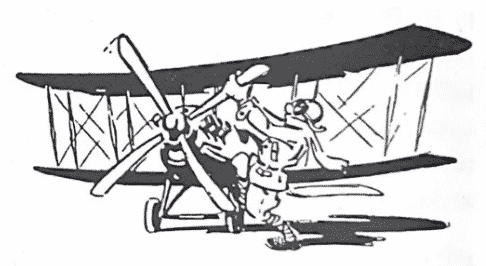
In 1927, the club established a ground school, secured an aerodrome, and cleared several runways. This made the Edmonton and Northern Alberta Aero Club the first to meet the government requirements for a flying club.
The first aircraft pledged by the government, a yellow wooden De Havilland 60X Cirrus Moth, G-CAKJ, arrived on June 23, 1928, and the second, G-CALB, arrived in August. May instructed the first class of 15 students in July, and the first four graduates were tested in September 1928.
Shortly after, Charles C. Becker took over as president. In 1929, Captain Moss Burbidge began teaching, training over 1,100 flyers.
Success and Growth
Despite struggles, the club continued to grow and, by the end of the first year, included 125 members. By 1931, the club had 20 graduated pilots and more flight hours than any other club in Canada.
Starting in 1930, the club began putting on airshows, the first of which included over 65 aircraft and 35,000 attendees.
Wartime Involvement
In January 1940, the government contracted the club to train pilots for the RCAF and, in need of more space, the club relocated to Bowden, Alberta.
Post-War Development
In 1944, the club returned to Edmonton, was renamed the Edmonton Flying Club, and began operating as it does today.
A fire destroyed the club’s facilities, hangar, and 14 aircraft in 1967; however, the club recovered quickly and, by the end of the year, spent over $90,000 on new aircraft, flew 13,772 hours, had 12 aircraft in the air, and graduated 152 private pilots and 26 commercial pilots. The club developed rapidly throughout the 1970s, logging 28,000 flight hours annually.
Present-Day
Over the years, the club has had various aircraft, including Gypsy Moths, Cherokees, Archers, Fleet Canuks. Today, the training fleet consists of six Cessna 172s and one Piper Seminole.
The Edmonton Flying Club currently operates out of Parkland Airport in Parkland County, located West of Edmonton, Alberta. It is known as one of the best flight training schools in the country, has contributed to the training of thousands of pilots, and is regarded as a pioneer in Canadian aviation.
This page was derived from an article in a 1970s edition of Slipstream newsletter.
Click here to read the original article.
EFC Mission Statement
The Edmonton Flying Club’s mission is to foster potential and promote aviation through the highest standards of flight training for individual and career pilots.
Our goals are:
(1) to develop students consciously, intellectually, and vocationally;
(2) to equip students with the skills to lead responsible and productive pilot careers; and
(3) to provide a safe, professional, and modern environment that inspires growth and ignites a passion for lifelong learning.